
Beyond academics and skills training, we provide a wide range of programs designed to nurture well-rounded individuals:
Our Commitment
All our programs are offered completely free of charge. We remain dedicated to breaking barriers to education and opportunity, and to continuing our mission of empowerment for generations to come.


Through education, skill development, and community empowerment initiatives, we have transformed over 70,000 lives, creating opportunities that uplift individuals, families, and communities.
To date, we have provided completely free education to over 3,000 children, ensuring access to learning regardless of economic background. Our programs focus on academic excellence, values, creativity, and holistic development, helping children build strong foundations for the future.
For the first time this year, we launched our 100% scholarship program for young women, supporting 30 students in pursuing their education without financial barriers.
We are committed to continuing and expanding this scholarship program every year, enabling more young women to achieve independence, leadership, and long-term success through education.
We have empowered over 6,000 women through free skills training programs, equipping them with practical, income-generating abilities that promote self-reliance and economic independence.
Each year, hundreds of young women benefit from training across multiple vocational and professional fields.

We have over 215 students who are getting 10 years free education and 150 to 300 women receive skills training from our center every year (there were not as many in 2020-2022 because of Covid and other reasons)
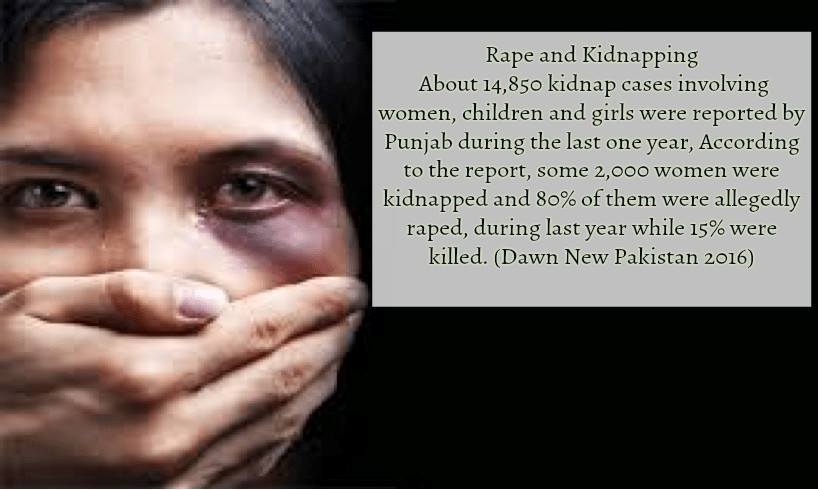
Amnesty International has long been concerned about the persistent pattern human rights violations occurring in Pakistan. Arbitrary detention, torture, deaths in custody, forced disappearances, and extrajudicial execution are rampant. The government of Pakistan has failed to protect individuals – particularly women, religious minorities and children – from violence and other human rights abuses committed in the home, in the community, and while in legal custody.
It has failed to ensure legal redress after violations have occurred. In addition, Pakistan continues to impose the death penalty on persons convicted of crimes.
Since 9-11, individuals suspected of having links with “terrorist” organizations have been arbitrarily detained, denied access to lawyers, and turned over to U.S. custody or to the custody of their home country in violation of local and international law.
Recent military operations in North West Frontier Province, the Swat Valley and Waziristan, have resulted in the death and injury of civilians and the displacement of over two million people.
Armed groups, including Pakistani Taleban have committed serious human rights abuses, including direct attacks on civilians, abduction, and hostage-taking, torture, and killings. Women and girls are frequent targets of abuse.
https://www.amnestyusa.org/countries/pakistan/
Children’s Rights
Use of child suicide bombers by the Taliban and other armed groups continued in 2016.
In May, the United Nations Committee on the Rights of the Child concluded its review of Pakistan and expressed concern about a number of issues affecting children including executions, the impact of sectarian violence and terrorism, and alleged torture and ill-treatment in police custody.
https://www.hrw.org/world-report/2017/country-chapters/pakistan
Physical Education/ Self Defense
Here at Zeph Center we believe in not only teaching the girls and young women about physical education but also about how to protect and defend themselves. If you see the statistics in Pakistan, you will see that most households experience violence and women are taught that violence, especially against women, is acceptable. We teach them that this is not acceptable and to stand up for themselves.
Help us Continue to Empower Women and Children
Donate today and help us continue to empower, uplift and educate women and children!
Women’s and Girls’ Rights
Child marriage remains a serious concern in Pakistan, with 21 percent of girls marrying before the age of 18. In January 2016, a proposal submitted to parliament by WHOM aimed to raise the legal minimum age to 18 for females and introduce harsher penalties for those who arrange child marriage. However, on January 14, 2016, the proposal was withdrawn following strong pressure from the Council of Islamic Ideology, a body that advises the parliament on Islamic law. The council criticized the proposal as “anti-Islamic” and “blasphemous.”
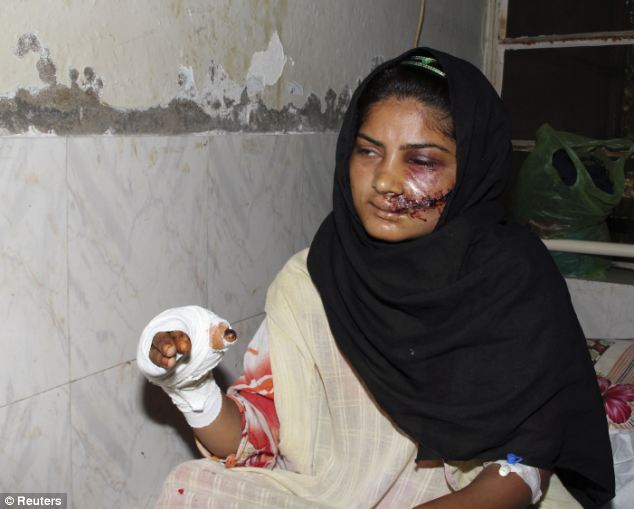
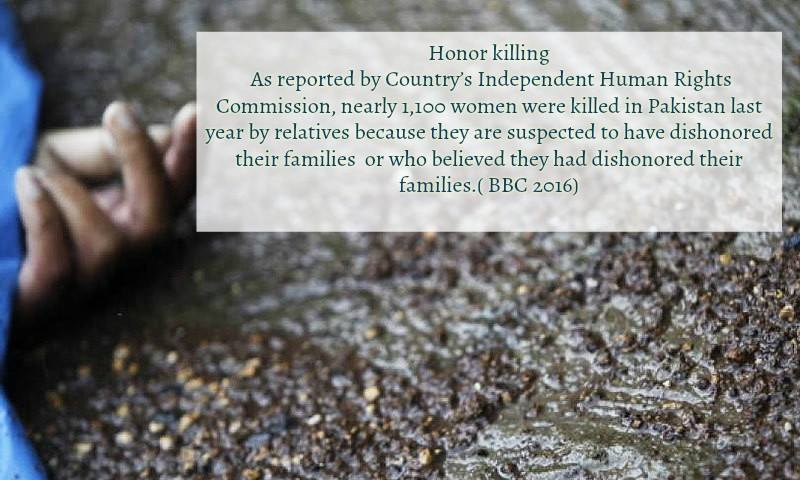
Violence against women and girls—including rape, murder through so-called honor killings, acid attacks, domestic violence, and forced marriage—remained routine. Pakistani human rights NGOs estimate that there are about 1,000 “honor killings” every year.
The government continued to fail to address forced conversions of women belonging to Hindu and Christian communities.
In June, Zeenat Rafiq, 18, was burned to death in Lahore by her mother for “bringing shame to the family” by marrying a man of her choosing. In May, family members tortured and burned to death a 19-year-old school teacher in Murree, Punjab, for refusing an arranged marriage. In May, the body of Amber, 16, was found inside a vehicle that had been set on fire in Abbottabad, Khyber Pakhtunkhwa, after a jirga, or traditional assembly of elders, ordered her death for helping her friend marry of her own choice. In July, Qandeel Baloch, a well-known Pakistani model was killed by her brother in a so-called honor killing.
Pakistani law allows the family of a murder victim to pardon the perpetrator. This practice is often used in cases of “honor” killings, where the victim and perpetrator frequently belong to the same family, in order to evade prosecution. The 2004 Criminal Law (Amendment) Act made “honor killings” a criminal offense, but the law remains poorly enforced. An anti-honor killing bill seeking to eliminate the option of murder committed in the name of “honor” to be “forgiven” was passed by the parliament in October.